

Most people assume that once you earn your pilot's license, the hard part is over. That belief is one of the most common misconceptions in aviation, and it can cost careers. Why aviation careers require dedication is not a simple question with a one-time answer. Dedication is not a phase you pass through during flight training and then leave behind. It is a constant, career-defining requirement that shapes how pilots train, stay healthy, make decisions under pressure, and keep their skills sharp across decades of flying. If you are an aspiring pilot in the Lynchburg area, understanding this early gives you a serious advantage.
Table of Contents
- The foundational dedication: structured education and early training
- Legal and health commitments: the non-negotiable FAA medical certification
- Mental dedication: mastering judgment and decision-making under pressure
- Ongoing skills dedication: maintaining manual flying proficiency in an automated age
- Career-long dedication: navigating the multi-year journey to becoming an airline pilot
- Why real dedication in aviation is about lifelong resilience and continual growth
- Achieve your aviation career goals with Parrillo Air Services
- Frequently asked questions
Key Takeaways
| Point | Details |
|---|---|
| Dedication starts early | Pilot commitment begins with sustained, structured education and simulation training long before solo flights. |
| Continuous medical compliance | Pilots must maintain valid FAA medical certificates as an ongoing, critical career requirement. |
| Mental discipline is vital | Successful pilots develop habits to manage biases and make safe decisions under pressure. |
| Manual skills must be practiced | Regular hands-on flying maintains essential capabilities that automation alone cannot replace. |
| Career progress requires persistence | Achieving airline qualification typically takes multiple years and steadfast dedication through training hurdles. |
The foundational dedication: structured education and early training
Before you ever touch the controls of an aircraft, dedication is already being asked of you. The importance of dedication in aviation starts at the educational level, where future pilots build the math, physics, and situational awareness skills that underpin everything else. Skipping this foundation does not just slow your progress. It creates gaps that show up later in the cockpit, often at the worst possible moments.
The FAA's ACE Academy pairs early interest with structured STEM and flight simulation education to build a foundation of sustained learning. Programs like this expose students to real aeronautical concepts through hands-on simulation, not just textbooks. They teach you to think like a pilot before you are one.
What does this look like in practice? Consider the difference between a student who has spent hours in ground simulation, learning to scan instruments and manage checklists, versus one who shows up to their first lesson with zero preparation. The first student builds on a foundation. The second one spends early lessons catching up. That gap compounds over time.
Here is what structured early preparation typically involves:
- Consistent engagement with math and physics concepts, particularly those related to lift, drag, and navigation
- Exposure to flight simulation software that mirrors real cockpit environments
- Developing a habit of pre-flight planning and post-flight review
- Building familiarity with FAA regulations and airspace classifications
Parrillo Air's flight training programs are built around this same principle: structured learning from day one. FAA certified flight training is not just about logging hours. It is about building the mental habits that carry you through a full career.
Legal and health commitments: the non-negotiable FAA medical certification
Here is something many aspiring pilots underestimate: your medical fitness is not just a box to check before training. It is an ongoing professional obligation that follows you for your entire flying career. Aviation career commitment includes a very physical dimension that other professions simply do not require.
FAA medical certificates are mandatory for pilots acting as PIC (pilot in command) or required crewmembers, with ongoing compliance vital for safety. There are three classes of medical certificates, each with different renewal intervals and standards. First-class certificates, required for airline transport pilots, must be renewed every 12 months if you are under 40, and every six months if you are 40 or older.
The renewal process involves a physical exam conducted by an FAA-designated Aviation Medical Examiner, or AME. You disclose your medical history, undergo vision and hearing tests, and confirm cardiovascular fitness. The goal is to catch conditions like sudden incapacitation risks before they become in-flight emergencies.
Here is how to stay ahead of your medical obligations:
- Schedule AME appointments well before your certificate expires, not the week before
- Keep a personal health log to track any changes in vision, hearing, or cardiovascular status
- Disclose conditions proactively through the AMOS (Aerospace Medical Certification Division) if you have a known condition, rather than waiting to be asked
- Maintain a healthy lifestyle consistently, not just in the weeks before an exam
"Your medical certificate is not just paperwork. It is proof that you take the safety of every passenger, crew member, and person on the ground seriously."
Pro Tip: If you have a pre-existing medical condition, consult a aviation medical examiner before you invest heavily in flight training programs. Many conditions are manageable with the right documentation, but knowing early saves time and money.
Mental dedication: mastering judgment and decision-making under pressure
Technical skill gets you airborne. Judgment keeps you alive. One of the most underappreciated challenges in aviation careers is the mental discipline required to make good decisions when every instinct is pushing you toward a bad one.
The most dangerous cognitive trap in aviation is called plan continuation bias, often nicknamed "get-there-itis." This is the tendency to press on with a flight plan even when new information suggests you should stop or divert. Human factors like plan continuation bias lead to critical accidents, and pilots must develop habits that enforce reassessment and safety-first decisions.
What makes this bias so dangerous is that it feels rational in the moment. You have passengers expecting to land. The weather looks like it might clear. You are almost there. Each of those thoughts is a signal to slow down and reassess, not accelerate.
Dedicated mental discipline looks like this in practice:
- Verbalizing doubts out loud during flight, even when flying solo, to externalize your thinking
- Cross-checking instruments rather than relying on a single reading or gut feel
- Treating any anomaly, no matter how minor, as a trigger to reconsider your plan
- Conducting honest post-flight debriefs where you identify moments of cognitive pressure
"The best pilots are not those who never feel pressure to continue. They are the ones who have trained themselves to recognize that pressure as a warning sign."
Pro Tip: Build a personal decision-making checklist for go/no-go situations before each flight. Having a written standard removes the emotional negotiation that happens in the cockpit when conditions deteriorate.
Pilot decision-making training is a formal part of good flight instruction, not an optional add-on. Make sure your training program addresses human factors directly, not just stick-and-rudder skills.
Ongoing skills dedication: maintaining manual flying proficiency in an automated age
Modern commercial aircraft can take off, navigate, and land with minimal pilot input. That fact has created a quiet crisis in aviation: pilots who are technically current but practically rusty when it comes to hand-flying. Aviation jobs and perseverance apply just as much to skill maintenance as they do to initial certification.
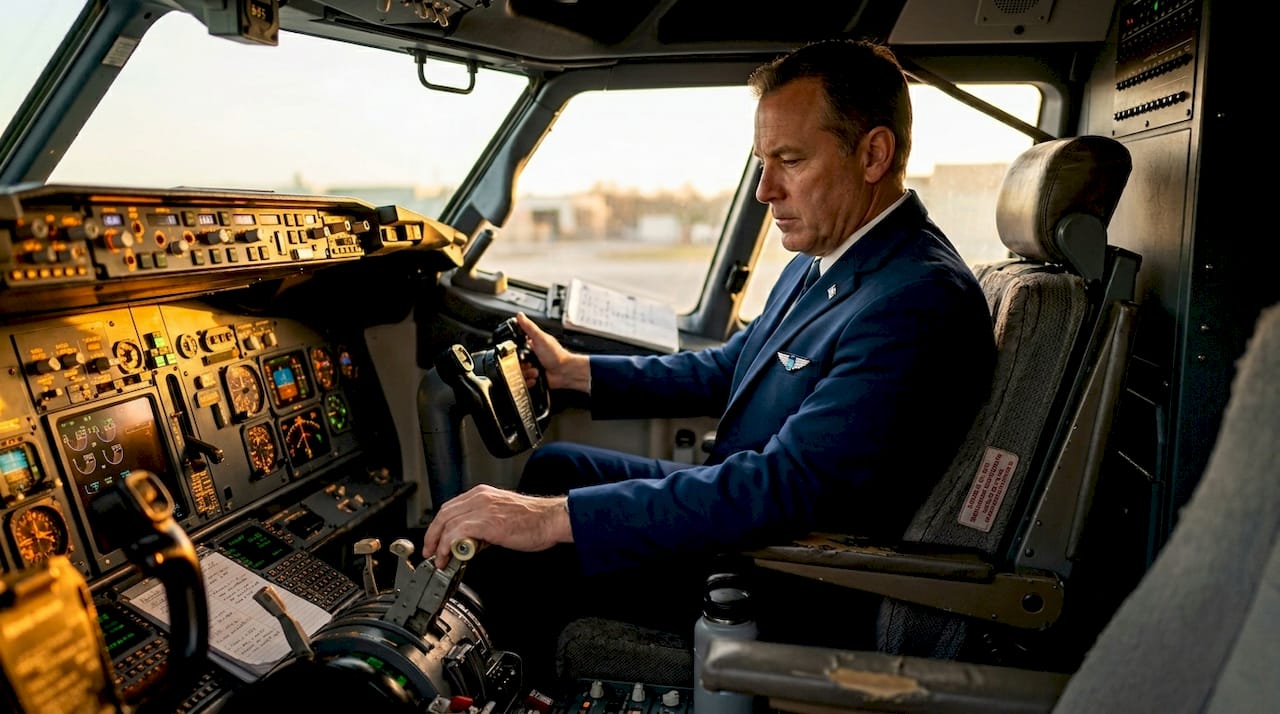
ALPA (the Air Line Pilots Association) advocates for pilots to maintain manual flying skills as automation increases, warning that relying solely on autopilot erodes essential abilities. This is not a theoretical concern. When automation fails during an abnormal scenario, the pilot who has been hand-flying regularly responds with confidence. The pilot who has not is suddenly managing a skill set that has atrophied.
Here is a comparison of what skill maintenance looks like with and without dedicated practice:
| Scenario | Pilot with regular manual practice | Pilot relying primarily on automation |
|---|---|---|
| Unexpected autopilot disconnect | Smooth transition to manual control | Delayed response, potential altitude deviation |
| Approach in degraded visibility | Confident instrument scan and correction | Instrument scan gaps, increased workload |
| Engine-out procedure | Practiced muscle memory and checklist flow | Hesitation, slower checklist execution |
| Crosswind landing in gusty conditions | Controlled, deliberate corrections | Overcorrection or late inputs |
The pattern is clear. Manual proficiency is not just about passing checkrides. It is the safety net that catches you when everything else fails.
Pro Tip: Even as a student pilot, practice flying without relying on GPS or autopilot assistance during training flights. Flight training skill maintenance built into your early habits will pay dividends throughout your career. Ask your instructor at Lynchburg flight training to include manual navigation exercises in your syllabus.
Career-long dedication: navigating the multi-year journey to becoming an airline pilot
Becoming an airline pilot is not a sprint. It is a structured, multi-year process with specific milestones, each requiring dedicated preparation and investment. Understanding this timeline is one of the most important things you can do before committing to aviation as a career.
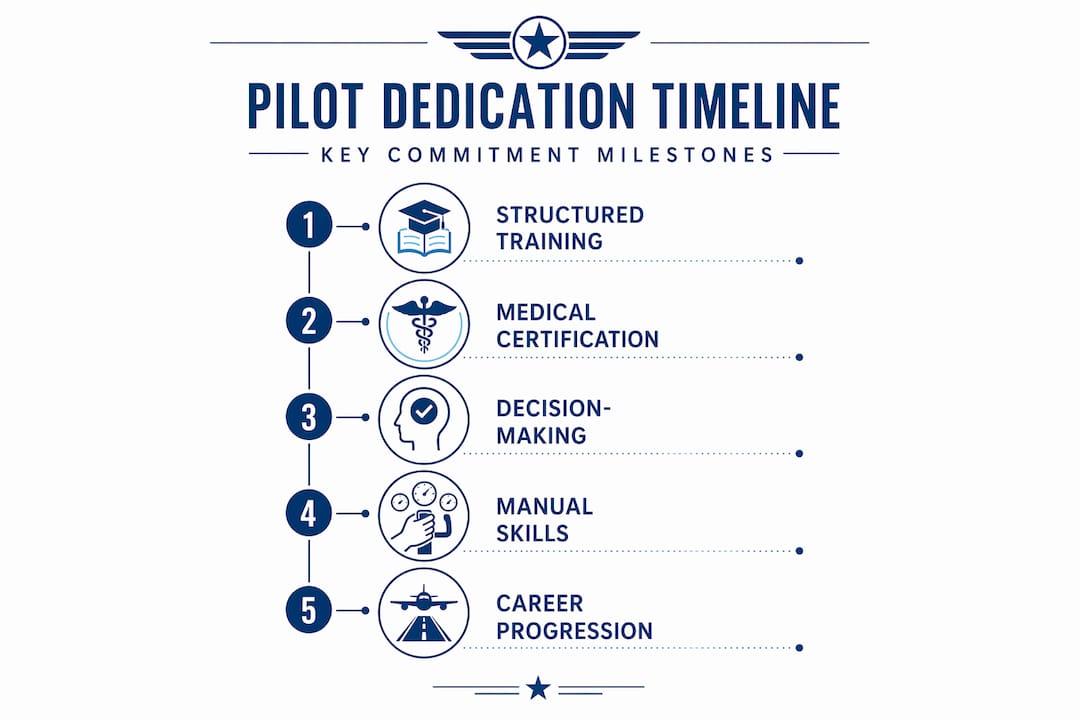
The pilot shortage is deeply tied to long training pipelines, aging workforce retirements, and multi-year qualification steps that require persistent dedication. This shortage actually creates opportunity for committed candidates, but only those who complete the full pathway.
Here is a general timeline for the pilot career pathway:
- Private Pilot License (PPL): Minimum 40 flight hours under FAA Part 61, typically 60 to 80 hours in practice
- Instrument Rating (IR): Additional 50 hours of cross-country time and 40 hours of instrument time
- Commercial Pilot License (CPL): Minimum 250 total flight hours
- Certified Flight Instructor (CFI): Optional but common path to build flight hours efficiently
- Airline Transport Pilot Certificate (ATP): Requires 1,500 total flight hours for most candidates
| Certification stage | Minimum flight hours | Approximate timeframe |
|---|---|---|
| Private Pilot License | 40 hours | 3 to 6 months |
| Instrument Rating | 50 additional hours | 3 to 5 months |
| Commercial License | 250 total hours | 1 to 2 years total |
| ATP Certificate | 1,500 total hours | 3 to 5 years total |
The financial investment is real, and so are the transportation career hiring challenges that affect candidates across the industry. But the pilots who succeed are not necessarily the most naturally talented. They are the ones who stay consistent through the setbacks, the weather delays, the failed checkrides, and the long stretches between milestones.
Why real dedication in aviation is about lifelong resilience and continual growth
Here is an opinion that most aviation articles will not give you: the biggest barrier to a successful pilot career is not the cost, the time, or even the difficulty of the training. It is the mistaken belief that dedication has a finish line.
Every certification you earn is a starting point, not a destination. The private pilot who stops questioning their decisions is already developing dangerous habits. The commercial pilot who trusts automation more than their own instrument scan is slowly eroding the skills that will matter most in a crisis. Dedication includes psychological resilience to combat biases and continual skill retention amidst advancing technology.
What separates the pilots who build long, safe careers from those who plateau or worse is not talent. It is the daily practice of small, unglamorous habits. Reviewing weather briefings more carefully than required. Debriefing your own flights honestly. Asking your instructor a question you feel embarrassed to ask. Those habits, repeated over years, are what dedication actually looks like in aviation.
Maintaining manual flying proficiency is a vital, ongoing professional responsibility that challenges assumptions about automation. The pilots who embrace this are not being old-fashioned. They are being professional. Automation is a tool, not a replacement for judgment and skill.
The aspiring pilots in Lynchburg who will go furthest in this career are not necessarily the ones who are most excited about flying on day one. They are the ones who are still curious, still self-critical, and still practicing deliberately on day one thousand. That is what pilot mindset development looks like when it is working.
Achieve your aviation career goals with Parrillo Air Services
Dedication without direction is just effort. What aspiring pilots in the Lynchburg area need is a training environment that matches their commitment with structure, experienced instruction, and a clear path forward.
At Parrillo Air Services, our FAA certified flight training programs are built around the same principles this article covers: consistent skill development, sound decision-making habits, and a progression from discovery flights all the way to commercial and flight instructor certifications. Our instructors do not just teach you to pass checkrides. They prepare you for a career. Whether you are just starting out or working toward your instrument or commercial rating, our flight training programs give you the structure and support to stay on track. Visit our student resources to see what your training journey looks like from day one.
Frequently asked questions
What makes dedication so important in an aviation career?
Dedicated pilots maintain ongoing training, medical compliance, and critical decision-making skills essential for safety and career progression. Continuous medical certification alone requires consistent health management and periodic FAA exams throughout your career.
How long does it typically take to become an airline pilot?
It often takes several years to complete all licenses, ratings, and flight hours needed to qualify for an airline pilot position. Pilot qualification involves multiple licenses and thousands of flight hours, with the ATP certificate requiring 1,500 hours for most candidates.
Why is manual flying proficiency still needed with modern autopilot technology?
Pilots must maintain manual flying skills because automation can fail, and hands-on competence is vital during abnormal conditions. Automation reliance can erode pilots' manual abilities, making ongoing practice a professional safety obligation, not just a preference.
What human factors pose challenges to pilot decision-making?
Plan continuation bias, often called "get-there-itis," causes pilots to press on despite emerging risks, and dedicated training helps to mitigate it. Human biases like this significantly impact in-flight decision-making and are a leading contributor to preventable accidents.