
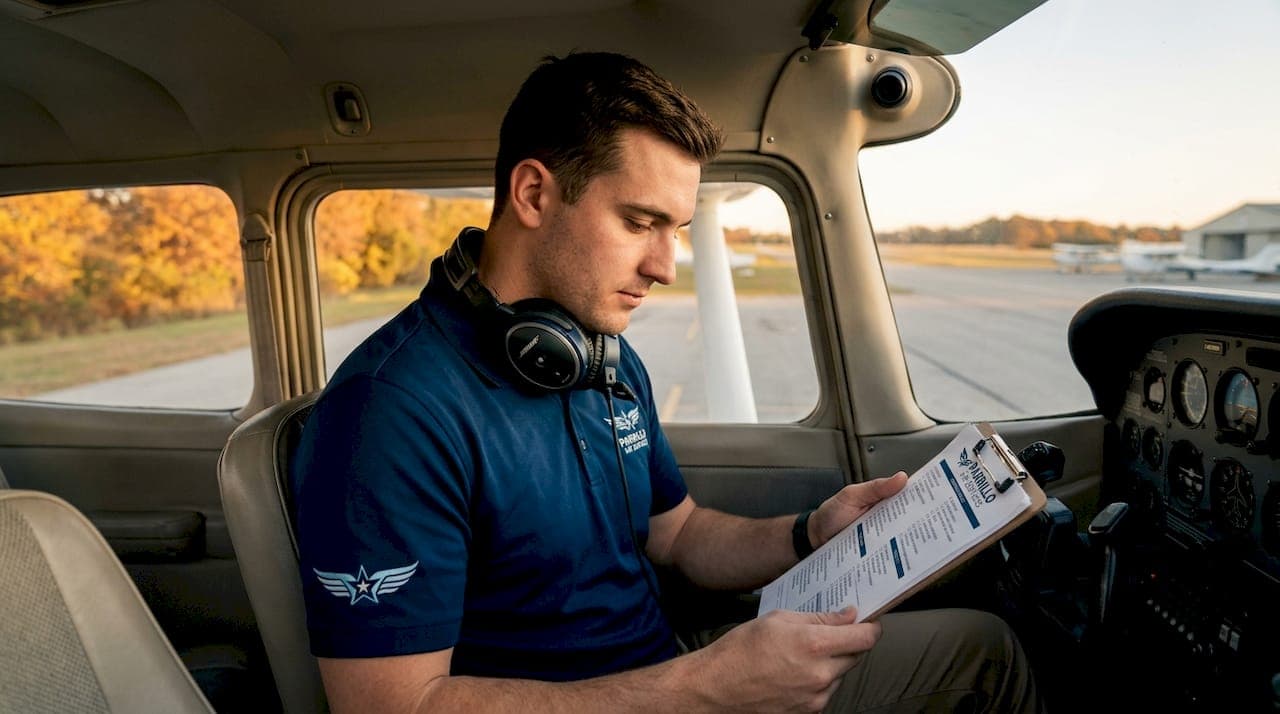
Most people assume that becoming a private pilot is simply a matter of logging 40 hours in the air. That idea is understandable, but it's incomplete in ways that can seriously derail your training if you're not prepared. A Private Pilot Certificate, which the FAA officially calls a "certificate" rather than a "license," is a credential that authorizes you to act as pilot in command of an aircraft under specific rules and conditions. For aspiring pilots in the Lynchburg, VA area, understanding the full picture before you start training means fewer surprises, less wasted money, and a much clearer path forward.
Table of Contents
- What is a private pilot license?
- FAA requirements for earning your PPL
- Flight training in Lynchburg, VA: Your options
- Is a private pilot license just the starting point?
- The uncomfortable truth about getting your PPL
- Ready to start your journey? Fly local with expert guidance
- Frequently asked questions
Key Takeaways
| Point | Details |
|---|---|
| A PPL is not just a 40-hour milestone | The private pilot certificate requires meeting FAA eligibility, testing, and proficiency benchmarks beyond raw flight hours. |
| Privileges and limits are clear | You can fly passengers but not for hire or compensation with a PPL. |
| Local flight training matters | Training providers at Lynchburg Regional Airport offer structured and flexible paths toward your license. |
| It is the first step, not the finish line | For aviation careers, the PPL serves as a foundation for advanced ratings and roles. |
What is a private pilot license?
The term "private pilot license" is widely used, but the FAA's official term is Private Pilot Certificate. The distinction matters because the word "license" implies something you can lose and renew like a driver's license, while a certificate reflects a demonstrated level of aeronautical knowledge and skill. Once you earn it, it doesn't expire, though your medical certificate and currency requirements do.
So what can you actually do with one? The major privileges and limitations of a private pilot certificate break down like this:
| Privileges | Limitations |
|---|---|
| Act as pilot in command (PIC) | Cannot fly for hire or compensation |
| Carry passengers | Cannot operate commercially |
| Fly in most airspace with proper ratings | Cannot serve as PIC for air carrier operations |
| Share flight expenses with passengers | Cannot log time as required crew for hire |
| Fly internationally (with proper clearances) | Must follow VFR weather minimums without instrument rating |
| Tow gliders or banners (with endorsement) | Cannot fly in Class A airspace without instrument rating |
The certificate is the FAA credential that gives you legal authority to fly as pilot in command. It's the foundation for everything that comes after, including your instrument rating, commercial certificate, and eventually an airline transport pilot (ATP) certificate if you're headed toward a career in aviation.
Key limitation to remember: A private pilot certificate does not allow you to accept payment for flying. You can share the pro-rata cost of a flight with your passengers, but the moment money flows to you as compensation, you've crossed into commercial territory that requires a commercial pilot certificate.
Here are a few common misconceptions worth clearing up right away:
- "I can fly anywhere once I have my PPL." Not quite. You still need specific endorsements and ratings for certain airspace, aircraft types, and conditions.
- "40 hours is all it takes." The FAA minimum is 40 hours, but the national average is closer to 60 to 70 hours before students pass their checkride.
- "A PPL lets me fly for a small charter company." No. Commercial operations require a commercial pilot certificate and additional qualifications.
- "My PPL never needs renewal." The certificate itself doesn't expire, but your flight review (every 24 calendar months) and medical certificate do.
FAA requirements for earning your PPL
Understanding the privileges and limits of a PPL leads directly to the real question: what does it actually take to earn one? The FAA lays out clear eligibility standards in 14 CFR §61.103, and meeting those standards requires more than just showing up to fly.
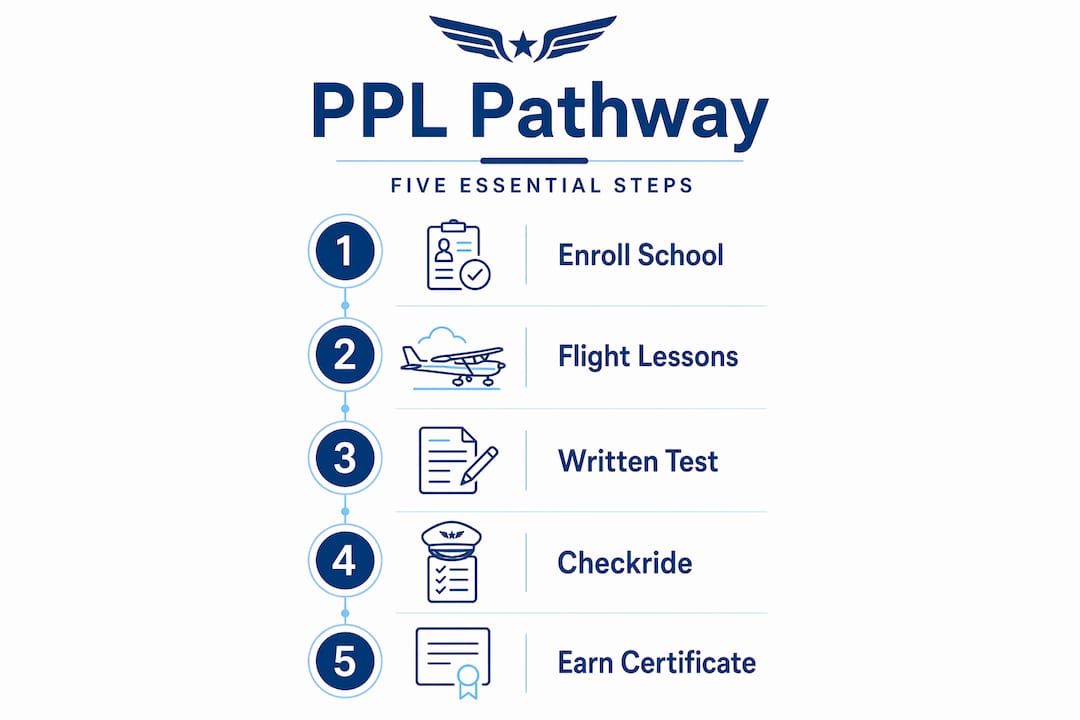
Here's the step-by-step sequence you'll work through:
- Meet the age requirement. You must be at least 17 years old to be eligible for a private pilot certificate in an airplane. The exception is gliders and balloons, which have a lower minimum age of 16.
- Obtain an FAA Medical Certificate. Before you solo, you need at least a Third Class Medical Certificate from an FAA Aviation Medical Examiner (AME). This screens for conditions that could affect your ability to fly safely.
- Demonstrate English language proficiency. The FAA requires that you can read, speak, write, and understand English. This is non-negotiable for U.S. certificates.
- Complete aeronautical knowledge training. You'll study topics including regulations, weather, navigation, aerodynamics, and aircraft systems. This culminates in the FAA Knowledge Test (often called the written exam), which you must pass with a score of 70% or higher.
- Log the required flight experience. The FAA minimum is 40 hours of flight time, including at least 20 hours of flight training with an instructor and 10 hours of solo flight time. Solo time must include specific cross-country and night flying requirements.
- Receive all required logbook endorsements. Your Certified Flight Instructor (CFI) must endorse your logbook for solo flight, solo cross-country flight, and the practical test. These endorsements are legal documents, not formalities.
- Pass the FAA Practical Test (Checkride). An FAA Designated Pilot Examiner (DPE) evaluates both your oral knowledge and your flying skills. You must demonstrate proficiency across all required areas of operation.
Pro Tip: Start a dedicated logbook and endorsement folder from your very first flight lesson. Many students scramble at the end of training because their documentation is scattered. Your logbook is a legal record, and gaps or missing endorsements can delay your checkride by weeks.
The practical test is often where students feel the most pressure, but it's really a structured conversation and a skills demonstration. The examiner isn't trying to fail you. They want to confirm that you can make sound decisions and handle an aircraft safely without an instructor in the right seat.
Flight training in Lynchburg, VA: Your options
Local training options matter more than most aspiring pilots realize. The quality of your instruction, the condition of the aircraft fleet, and the flexibility of scheduling all directly affect how quickly and confidently you earn your certificate. For pilots in the Lynchburg area, Lynchburg Regional Airport (LYH) serves as the hub for flight training through local providers using both Part 61 and Part 141 training pathways.
Understanding the difference between those two pathways is essential before you commit to a program:
| Feature | Part 61 | Part 141 |
|---|---|---|
| Curriculum structure | Flexible, instructor-driven | FAA-approved, standardized syllabus |
| Minimum flight hours | 40 hours | 35 hours (with structured curriculum) |
| Scheduling | More adaptable to your schedule | More rigid, sequential stages |
| Best for | Working adults, self-paced learners | Students who want structured progression |
| FAA oversight | Less prescriptive | Regular stage checks and FAA audits |
Part 61 training is often the right fit for adults who are balancing work, family, and flight training. It allows your CFI to tailor lessons to your pace and learning style. Part 141 programs follow a tighter, FAA-approved curriculum with stage checks built in, which can benefit students who thrive with structured milestones.
When evaluating local flight training programs, consider these factors before making a decision:
- Aircraft availability and condition. Older or poorly maintained aircraft can ground your training unexpectedly.
- Instructor experience and continuity. Switching instructors mid-training is one of the biggest causes of delays. Find a school where you'll work with the same CFI consistently.
- Scheduling flexibility. If you work a 9-to-5 job, you need a school that offers early morning, evening, or weekend slots.
- Cost transparency. Ask for a full breakdown of aircraft rental, instructor fees, exam fees, and materials. Hidden costs add up fast.
- Ground school support. Some schools include ground school in their programs; others charge separately. Make sure you know what's included.
FAA Certified Flight Training in Lynchburg is available through providers who understand the local airspace, the weather patterns around the Blue Ridge Mountains, and the specific challenges of training at a regional airport. That local knowledge genuinely accelerates your learning.
Is a private pilot license just the starting point?
For anyone serious about a career in aviation, the private pilot certificate is exactly that: a starting point. It's a critical first step for professional pilots, but it's not the destination. The FAA credential system is sequential, and each certificate or rating builds on the one before it.
Here's what the progression typically looks like for someone pursuing a professional aviation career:
- Private Pilot Certificate (PPL): The foundation. Allows you to fly and carry passengers under VFR conditions.
- Instrument Rating (IR): Authorizes flight in instrument meteorological conditions (IMC), meaning clouds and low visibility. Essential for real-world utility and required for commercial work.
- Commercial Pilot Certificate (CPL): Allows you to be compensated for flying. Required before you can work as a paid pilot in any capacity.
- Multi-Engine Rating: Authorizes you to fly aircraft with more than one engine. Most airline and charter jobs require this.
- Certified Flight Instructor (CFI): Many pilots build the flight hours required for airline jobs by instructing. It's one of the most efficient and rewarding ways to accumulate time.
- Airline Transport Pilot Certificate (ATP): The highest FAA pilot certificate. Required to serve as captain of an airliner. Minimum 1,500 hours of total flight time.
The instrument and commercial rating path is something you should be thinking about even before you finish your PPL. Treat your private pilot training as the place where you build your habits, your discipline, and your understanding of how the FAA system works. Pilots who approach the PPL as a box to check often struggle when the complexity of instrument flying hits them.
For pilots interested in the broader transportation and logistics sector, a pilot license also opens doors in ways that many don't consider. The aviation industry connects directly to transport and logistics careers that value credentialed pilots across corporate, charter, and cargo operations.
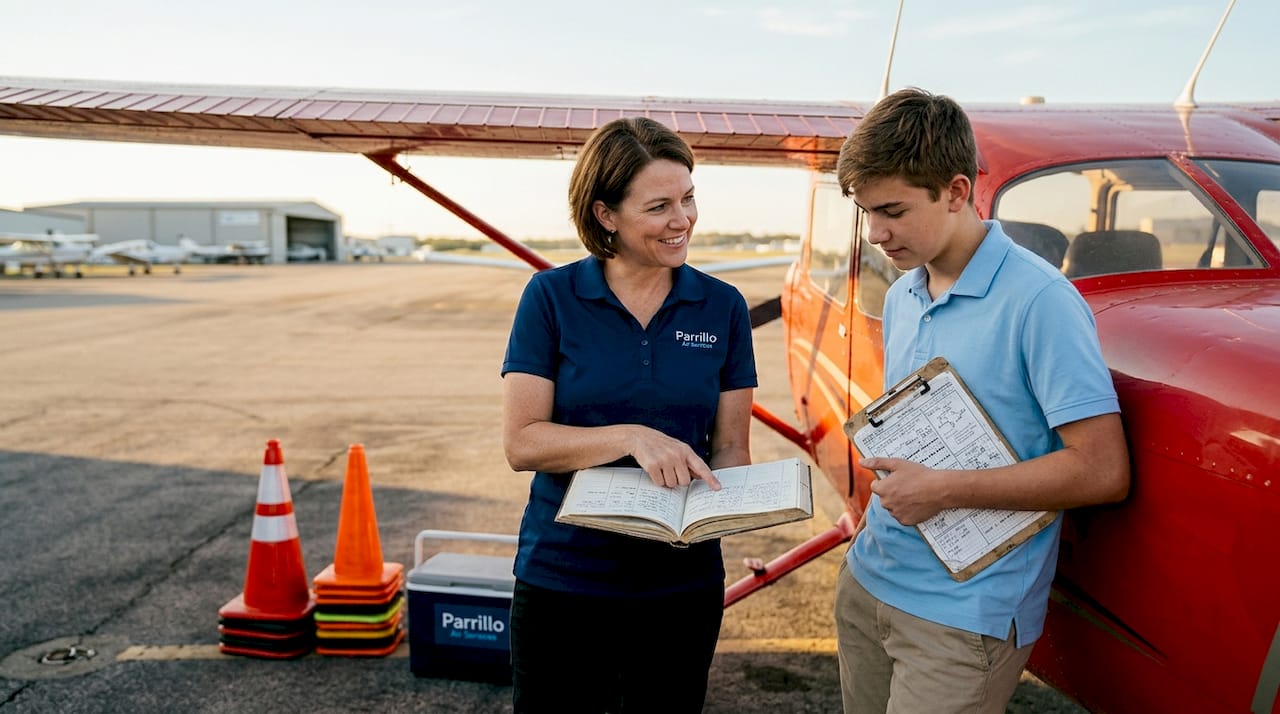
Pro Tip: Talk to your CFI about your long-term goals from day one. A good instructor will structure your PPL training with your next rating in mind, building habits and knowledge that carry forward instead of having to be unlearned later.
The uncomfortable truth about getting your PPL
Here's what most guides won't tell you: the majority of students who stall out during private pilot training don't fail because they can't fly. They stall because they underestimate how much the non-flying parts of the process matter.
Scheduling gaps are the single biggest enemy of PPL completion. When a student goes two or three weeks without flying due to weather, work, or poor planning, they lose proficiency and have to repeat maneuvers they already demonstrated competence in. That costs money and erodes confidence. The structured requirements of 14 CFR §61.103 aren't just a checklist. They represent a system designed to build real, layered proficiency, and that system only works if you engage with it consistently.
Documentation is the other silent killer. Missing logbook endorsements, incomplete ground school records, or a knowledge test that expires before your checkride can delay your certificate for months. These are administrative problems, not flying problems, but they're just as real.
Our experience at Parrillo Air Services shows that the students who finish fastest and with the most confidence are the ones who treat the PPL like a professional milestone. They show up prepared, they ask questions, they review their logbooks regularly, and they communicate with their instructor about what's coming next. The value of local flight schools that offer personalized instruction isn't just about aircraft access. It's about having someone in your corner who knows your specific gaps and can address them directly.
The 40-hour myth persists because it's a convenient shorthand. But aviation rewards precision, and your training should reflect that from the very beginning.
Ready to start your journey? Fly local with expert guidance
If this guide has clarified what a private pilot certificate actually involves, the next step is connecting with a team that can walk you through the process in person.
At Parrillo Air Services in Lynchburg, VA, we offer personalized Part 61 flight instruction designed to meet you where you are, whether you're a complete beginner or someone who started training elsewhere and needs to finish strong. You can explore details about flight training programs on our site, access resources through our support for student pilots page, or simply reach out to schedule a discovery flight. FAA Certified Flight Training doesn't have to be intimidating when you have a local instructor who knows the airspace, the regulations, and exactly what it takes to get you to your checkride ready and confident.
Frequently asked questions
How old do you have to be to get a private pilot license?
You must be at least 17 years old to qualify for a private pilot certificate in the U.S. for airplanes, though you can begin training and even solo at 16.
Can you fly passengers with a private pilot license?
Yes, you can carry passengers, but the certificate prohibits flying for compensation or hire in any commercial capacity.
How long does it typically take to get a PPL in Lynchburg, VA?
Most students complete their private pilot certificate within four to eight months, depending on how consistently they schedule lessons, local weather conditions, and aircraft availability at Lynchburg Regional Airport.
Is the private pilot license enough for a pilot career?
No. The PPL is the essential first step, but you'll need an instrument rating, commercial certificate, and additional ratings before you can work as a paid pilot. The full career path requires building significant flight hours and credentials beyond the PPL.
What's the difference between Part 61 and Part 141 flight schools?
Part 61 programs offer more scheduling flexibility and a self-paced structure, while Part 141 programs follow a standardized, FAA-approved curriculum with formal stage checks. Both pathways qualify you for the private pilot certificate.